
Table of Contents
The Toyota RAV4 Hybrid has become a popular choice for drivers who want the practicality of an SUV without giving up fuel efficiency. But what actually makes the RAV4 Hybrid so economical?
The answer is not simply the battery. Its fuel efficiency comes from the way the gasoline engine, electric motors, battery, and regenerative braking system work together.
1. A Hybrid Powertrain That Uses Electricity Efficiently
The RAV4 Hybrid combines a gasoline engine with electric motors to optimize power delivery according to driving conditions. At low speeds and during initial acceleration, the electric motor can provide propulsion, while the gasoline engine can shut off when conditions allow. During normal driving, the system automatically balances engine and motor power for efficient operation.

This intelligent combination is one of the main reasons the RAV4 Hybrid can deliver strong fuel economy without requiring drivers to charge the vehicle like a fully electric SUV.
2. Regenerative Braking Recovers Energy
One of the biggest advantages of a hybrid system is its ability to recover energy that would otherwise be lost during deceleration.
When the efficient RAV4 Hybrid SUV slows down, its electric motor can operate as a generator, converting some of the vehicle's kinetic energy into electricity and storing it in the traction battery.
This means braking and deceleration can help replenish the battery, allowing the stored energy to be used again.
3. Electric Assistance Reduces Fuel Consumption
An efficient hybrid SUV powertrain can reduce the amount of work required from the gasoline engine, particularly during low-speed driving and acceleration.
The electric motor can provide immediate torque when the vehicle starts moving, while the gasoline engine contributes when additional power or sustained driving efficiency is needed. This combination provides both responsive performance and efficient energy use.
4. Smart Energy Management Matters
The RAV4 Hybrid does not simply switch between gasoline and electric power randomly. Its hybrid control system continuously responds to driving conditions.
Toyota's system can automatically manage engine operation, electric motor output, and battery charging. Newer RAV4 systems can also use navigation and traffic information to optimize energy use in certain driving situations.
For buyers comparing Toyota RAV4 Hybrid fuel economy, this intelligent energy management is an important factor to consider.
5. Fuel Efficiency Without Sacrificing SUV Practicality
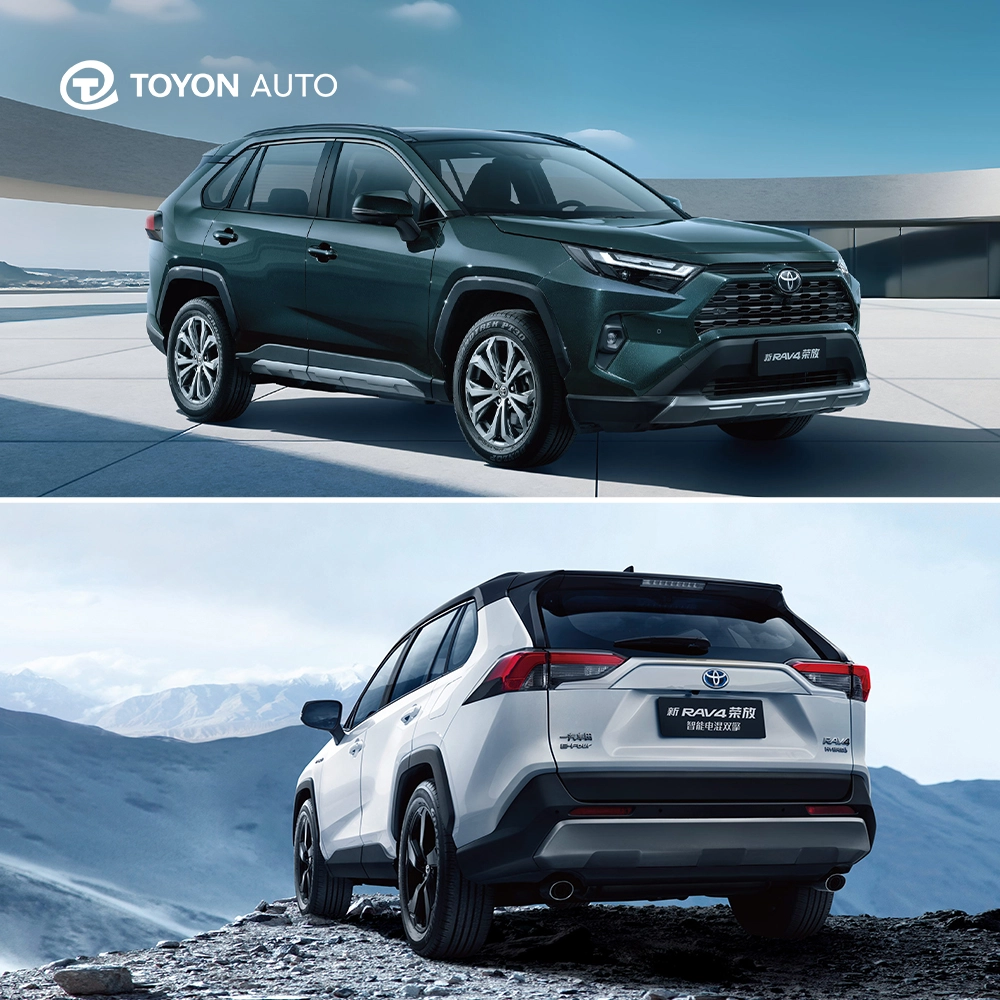
Another reason the RAV4 Hybrid attracts buyers is that it combines efficiency with the features people expect from a compact SUV. The hybrid system can provide strong acceleration while maintaining practical passenger and cargo space.
For example, Toyota's 2025 U.S. specifications list a 2.5-liter four-cylinder hybrid powertrain, with EPA-estimated fuel economy of up to 41 mpg city and 38 mpg highway, depending on configuration.
Final Thoughts
So, what makes the RAV4 Hybrid so fuel-efficient?
It is the combination of electric motor assistance, efficient engine operation, regenerative braking, and intelligent energy management. Rather than relying on one technology, the system continuously looks for opportunities to use energy more efficiently.
For drivers who want an economical hybrid SUV for daily driving, commuting, and family use, this combination makes the Toyota RAV4 Hybrid an attractive option.
FAQs
1. How fuel-efficient is the Toyota RAV4 Hybrid?
Fuel economy varies by model year and configuration. For example, the 2025 RAV4 Hybrid is rated at up to 41 mpg city and 38 mpg highway in the U.S. market. Different trims can have different ratings, so buyers should check the specific configuration.
2. Does the Toyota RAV4 Hybrid need to be plugged in?
No. The standard RAV4 Hybrid does not need to be plugged into an external power source. Its hybrid battery is charged through the vehicle's hybrid system, including regenerative braking. This makes it different from a plug-in hybrid, which can be charged externally.
3. Is the RAV4 Hybrid worth buying for fuel savings?
It can be a strong choice for drivers who want an SUV with good fuel efficiency without switching to a fully electric vehicle. Whether the additional purchase cost is worthwhile depends on annual mileage, fuel prices, driving conditions, ownership period, and the price difference between hybrid and gasoline models.
4. What makes the RAV4 Hybrid different from a plug-in hybrid?
A standard RAV4 Hybrid primarily recharges its battery through the hybrid system and regenerative braking, so external charging isn't required. A plug-in hybrid has a larger battery and can be charged from an external power source, allowing it to drive longer distances using electricity alone. Toyota's 2026 RAV4 lineup includes both Hybrid and Plug-in Hybrid options.
5. Is the RAV4 Hybrid more expensive to maintain?
Maintenance requirements can differ from a conventional gasoline SUV because the RAV4 Hybrid uses both gasoline and electric components. However, the hybrid system is designed to work automatically without requiring drivers to manage the battery manually. Toyota's scheduled maintenance requirements should be followed according to the specific model year's owner's information.
6. Why does the RAV4 Hybrid get better fuel economy than a gasoline RAV4?
The RAV4 Hybrid combines a gasoline engine with electric motors. The electric motors can assist during acceleration and other driving conditions, while regenerative braking recovers some energy that would otherwise be lost. This reduces the amount of fuel needed for certain types of driving.